



Wildcard SSL certificates सतह पर सरल दिखाई देते हैं। एक certificate पूरे domain और उसके सभी subdomains को secure करता है। बढ़ते infrastructure के लिए, यह model efficient लगता है, यहाँ तक कि जरूरी भी।

लेकिन production environments समीकरण बदल देते हैं। Subdomains तेज़ी से scale करते हैं। Services move होती हैं। Renewal cycles overlap होते हैं। जो operational convenience के रूप में शुरू होता है, अगर visibility और automation pace नहीं रख पाते तो वह जल्दी renewal risk में बदल सकता है।
यह case study SSL Dragon के एक client द्वारा live infrastructure में wildcard SSL के implementation की जांच करता है। यह उस operational layer पर केंद्रित है जिसे अधिकांश teams underestimate करती हैं — renewal coordination, trust boundaries, monitoring gaps, और वे systems जो एक single certificate को दर्जनों services को disrupt करने से रोकने के लिए आवश्यक हैं।
Client Snapshot
- कंपनी: SecureME
- Industry: Managed Security Services
- स्थापना: 1991
- Scope: Infrastructure & cybersecurity operations
- Focus: Wildcard SSL lifecycle management
मुख्य बातें
- एक wildcard पूरे domain clusters को secure करता है। Deployment overhead कम करता है और subdomain rollout की speed बढ़ाता है।
- Renewals असली operational load drive करते हैं। हर dependent system को update करने में coordination की जरूरत होती है।
- Monitoring gaps सबसे बड़ा risk पैदा करते हैं। Manual tracking अक्सर missed expirations का कारण बनती है।
- Ownership wildcard की suitability define करती है। तब सबसे अच्छा काम करता है जब एक team सभी subdomains को control करे।
- Automation renewals को reliable रखता है। Manual processes scale नहीं करते।
SecureME Production में Wildcard SSL का कैसे उपयोग करता है
SecureME एक managed security services provider है जो 1991 से operating है, जो enterprise और client systems में integrated cybersecurity और infrastructure protection में specializes करता है।
उनका काम internal platforms, externally exposed services, और segmented client environments को span करता है जहाँ encryption continuity और certificate trust का direct operational role होता है।
जैसे-जैसे domain structures उन deployments में expand होते हैं, wildcard SSL एक convenience feature कम और structural necessity ज़्यादा बन जाता है।
उस operational layer की देखरेख Walter Russo करते हैं, जो SecureME के production और client environments में certificate infrastructure और lifecycle operations को manage करते हैं।
Certificate Coverage Snapshot
आज, जो environment उनकी निगरानी में है उसमें शामिल है:
- 25+ active wildcard SSL certificates
- 30+ active certificates overall (wildcard, single-domain, multi-domain)
- Production systems, internal platforms, और client deployments को coverage
- Annual से triennial validity periods तक के renewal cycles
“Production में, मैं मुख्यतः wildcard SSL certificates का उपयोग करता हूँ। ये मुझे एक single certificate के साथ पूरे domain और उसके सभी subdomains को secure करने की अनुमति देते हैं, जो configuration को simplify करता है और operational overhead को reduce करता है,” Walter बताते हैं।
हर service layer के लिए individual certificates को track करने के बजाय, उनकी team single wildcard cert के तहत पूरे domain clusters को secure करती है। यह model configuration repetition को reduce करता है और हर बार जब कोई subdomain live होता है तो new certificates को request और deploy करने की आवश्यकता को हटाता है।
Platforms के लिए जो continuously evolve होते हैं, यह consolidation certificate management को services के actually scale होने के तरीके के साथ align करता है — domain level पर, endpoint level पर नहीं।
जहाँ Wildcard Efficiency Renewal Reality से मिलती है
एक बार wildcard certificate live हो जाता है, तो यह एक से अधिक systems से tied हो सकता है। कुछ organizations encryption को एक जगह terminate करती हैं। अन्य इसे load balancers, application servers, या internal gateways में spread करती हैं। इसे पर्याप्त समय दें, और certificate इतनी दूर तक spread हो जाता है कि इसके locations और dependencies को track करना challenge बन जाता है।
यहीं पर SSL renewal वास्तविक coordination की मांग करना शुरू करती है, और Walter ने pressure को firsthand देखा है:
“सबसे कठिन हिस्सा scale पर renewals को reliably manage करना है। जब multiple domains और environments involved हों, तो expiration dates को miss करना या renewed certificates को हर जगह propagate करने में fail होना आसान है जहाँ उनकी जरूरत है।”
Renewal केवल certificate को expire होने से पहले replace करना नहीं है। इसका मतलब यह सुनिश्चित करना है कि updated version हर system तक पहुँचे जो इसका उपयोग करता है। कुछ services instantly update होती हैं। अन्य को scheduled maintenance, manual deployment, या teams के बीच handoffs की आवश्यकता होती है।
“Teams, systems, और deployment pipelines में renewals को coordinate करना अक्सर certificates issue करने से ज़्यादा complex होता है,” Walter जोड़ते हैं।
Certificate issue करना simple है क्योंकि यह controlled moment में होता है। Renewal अलग है। यह तब होती है जब सब कुछ running होता है, timing, visibility, और clear communication पर pressure बढ़ाती है।
अगर नई cert हर जगह roll out हो जाती है, तो कोई notice नहीं करता। Life चलती रहती है। लेकिन एक missed update पूरे mood को flip कर देती है: warnings pop up होती हैं, requests fail होने लगती हैं, और आपके internal dashboards red हो जाते हैं।
और क्योंकि wildcard certificates पूरे domain layers को secure करते हैं, impact isolated नहीं रहता।
जहाँ Renewal Pressure Build होता है
Walter renewal cycles के दौरान surface होने वाले कई friction points की ओर इशारा करते हैं:
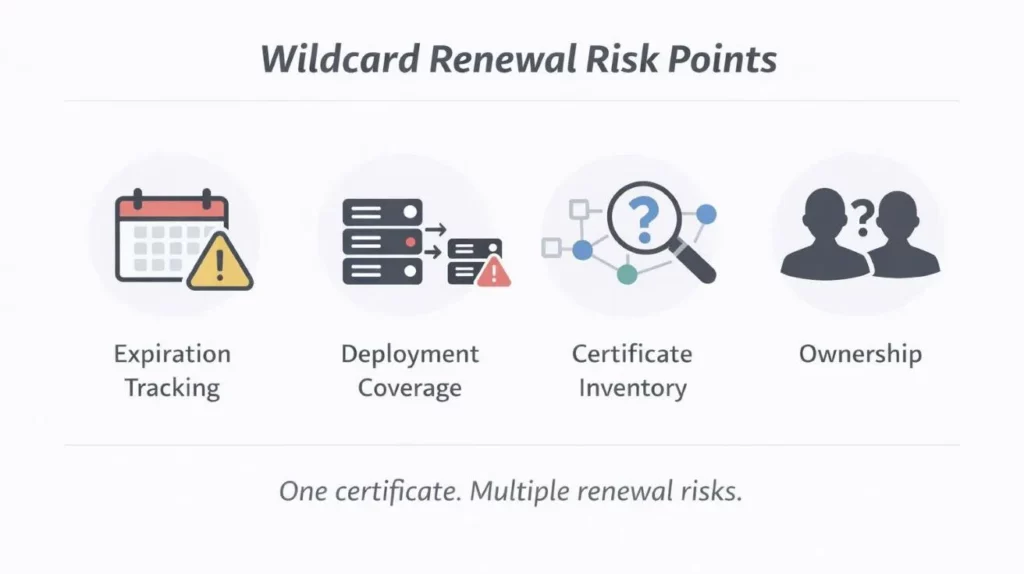
- Expiration dates को separate tools या calendars में track किया जाता है।
- Renewed certificates को core systems में deploy किया गया, लेकिन कहीं और miss हो गया।
- Dependencies जो fully documented नहीं हैं।
- Teams assume कर रही हैं कि किसी और ने update handle कर लिया।
जब चीजें slip through the cracks हो जाती हैं, तो पुराना cert वहाँ stick around कर सकता है जहाँ आप कम से कम expect करते हैं।
Wildcard Renewals क्यों Broader Impact रखते हैं
Wildcard certificates उन certificates की संख्या को reduce करते हैं जिन्हें teams manage करती हैं। लेकिन ये हर certificate में अधिक weight pack करते हैं जिसका आप उपयोग करते हैं।
- एक certificate multiple services को protect करता है।
- Missed renewal पूरे domain groups को affect करती है।
- Issue को fix करने का मतलब हर dependent system को update करना है।
- Recovery के लिए teams में fast coordination की जरूरत होती है।
यह wider service impact ही wildcard SSL को deployment convenience से operational responsibility में shift करता है।
Walter के लिए, certificate renew करना issue नहीं है। असली काम उन systems से आता है जो इससे tied हैं और उस effort से जो यह track करने के लिए चाहिए कि सब कुछ कहाँ stand करता है।
SSL Management सबसे अधिक कहाँ Break Down होती है
Operational pressure certificate technology से नहीं, बल्कि teams के इसे manage करने के तरीके से आता है।
जब पूछा गया कि कौन सी failures सबसे अधिक surface होती हैं, तो Walter edge-case bugs या exotic misconfigurations की ओर नहीं इशारा करते। वे habits की ओर इशारा करते हैं।
“सबसे आम गलतियाँ manual renewals, monitoring की कमी, और poor documentation हैं।”
ये तीन issues एक दूसरे को reinforce करते हैं।
Manual renewals timing risk introduce करते हैं। किसी को date याद रखनी होती है, right system में log in करना होता है, CSR generate करना होता है, validation complete करनी होती है, cert deploy करना होता है, और propagation confirm करनी होती है। यह chain तब काम करती है जब setups small होते हैं। यह तब break होती है जब systems scale करते हैं। Monitoring gaps problem को और भी बदतर बना देते हैं।
“Teams अक्सर automation के बजाय reminders पर rely करती हैं, certificate expiration को centrally monitor नहीं करतीं, या यह sure नहीं होतीं कि कौन से services कौन से certificates पर depend करते हैं।”
Shared visibility layer के बजाय, expiration tracking inboxes, calendar notes, या internal tickets में होती है। समय के साथ, ownership blur हो जाती है। Certificates उन teams से ज़्यादा जीती हैं जिन्होंने उन्हें deploy किया था, और documentation drift fragility की अंतिम layer add करती है।
Dependencies change होती हैं। Load balancers move होते हैं। लेकिन certificate inventories हमेशा उनके साथ update नहीं होतीं। जब renewal time आता है, तो teams उन deployment maps को reconstruct करने के लिए scramble करती हैं जो शुरू से ही visible होने चाहिए थे। यहीं पर outages hit करते हैं।
Wildcard Certificates कब समझदारी की बात है — और कब नहीं
Walter अभी भी single-domain certificates के मुकाबले wildcard SSL को prefer करते हैं, भले ही renewal hassle हो। उनके लिए, असली सवाल convenience का नहीं है — यह जानना है कि सब कुछ को एक cert के तहत रखना कब help करता है, और कब यह सिर्फ अधिक exposure create करता है। उनकी decision process एक चीज़ में rooted रहती है: clear ownership और trust boundaries।
“मैं wildcard certificates choose करता हूँ जब multiple subdomains same trust boundary के हों और same team द्वारा manage किए जाते हों।”
दूसरे शब्दों में, wildcard तब सबसे अच्छा काम करता है जब responsibility centralized हो।
Walter इन्हें internal platforms, staging setups, और SaaS systems पर उपयोग करते हैं जिनमें clear subdomain patterns हैं जो wildcards को well handle करते हैं। आप कम certificate requests file करते हैं। Deployments faster move होती हैं। Configs उन services में aligned रहती हैं जो same team के तहत operate होती हैं।
Wildcard SSL Option Universal क्यों नहीं है
जब services अलग operational owners के तहत sit करती हैं, तो risk multiply होता है। Single certificate renewal अचानक separate teams, release windows, और infrastructure layers में coordination पर depend करने लगती है।
यहीं पर Walter line draw करते हैं:
“मैं इन्हें avoid करता हूँ जब stricter isolation या per-service ownership required हो।”
उन cases में, individual certificates cleaner separation create करती हैं। हर service independently renew होती है, और issues domain layers में spread नहीं होते।
Renewal Reminders से Automation की Shift
जैसे-जैसे infrastructure बढ़ता है, manual renewal inconvenient होना बंद करके dangerous हो जाती है।
Walter की guidance यहाँ direct है:
“जब SSL को scale पर manage कर रहे हों—खासकर बड़ी संख्या में wildcard certificates के साथ—सबसे महत्वपूर्ण recommendation renewals के लिए automation पर rely करना है।”
Automation human timing risk को remove करती है। Certificates schedule पर renew होती हैं। Validation automatically trigger होती है। Deployment pipelines manual handoffs के बिना updated certs pull करती हैं।
वे alternative के बारे में blunt हैं:
“Manual processes scale नहीं करते और expired certificates के कारण service disruption का risk बढ़ाते हैं।”
Goal केवल automatic issuance नहीं है। यह full workflow integration है।
“Teams को certificate issuance और renewal के लिए automated workflows अपनाने चाहिए, ideally उनके infrastructure या deployment pipelines में integrated।”
इसका मतलब renewal को CI/CD, configuration management, या secret distribution systems में tie करना है ताकि updates उसी तरह flow हों जैसे application changes होते हैं।
यहाँ तक कि wildcard consolidation भी उस need को remove नहीं करती।
“यहाँ तक कि wildcard certificates का उपयोग करके complexity को reduce करते समय भी, एक reliable और tested renewal mechanism होना essential है, क्योंकि single expired certificate एक साथ कई services को impact कर सकता है,” Walter conclude करते हैं।
TLS के बाहर Trust को Extend करना: VMC की Role
जबकि अधिकांश teams strictly transport-layer encryption पर focus करती हैं, Walter का certificate scope brand trust तक भी फैलता है।
जब पूछा गया कि क्या वे SSL के अलावा certificates manage करते हैं, तो वे Verified Mark Certificates की ओर इशारा करते हैं।
“हाँ, SSL certificates के अतिरिक्त, मैं BIMI standard के भाग के रूप में VMCs (Verified Mark Certificates) का भी उपयोग करता हूँ।”
VMC verified brand logos को outbound email के साथ tie करता है, supported mail clients को sender का authenticated logo directly inbox views में display करने की अनुमति देता है। यह visual signal branding से अधिक करता है।
“VMCs verified brand logos को supported email clients में display होने की अनुमति देते हैं, brand recognition, user trust, और phishing से protection में improve करने में help करते हैं।”
अगर spoofed emails financial या reputation damage का कारण बन सकती हैं, तो यह visibility recipients को safer feel कराती है। लेकिन VMC अपना renewal pressure लाता है:
“इन certificates को manage करने के लिए renewal timelines पर विशेष ध्यान की आवश्यकता होती है, क्योंकि expiration email communications में brand visibility को directly impact कर सकती है,” Walter warn करते हैं।
TLS outages के विपरीत, जो system access को disrupt करते हैं, VMC expiration trust signals को erode करती है। Logos disappear हो जाते हैं। Authenticity indicators drop हो जाते हैं और phishing detection optics weaken हो जाते हैं।
Renewal Risk से Automation Control तक
Wildcard SSL पहली बार deploy करते समय convenient है। आप कम certificates manage करते हैं, नए subdomains को faster online लाते हैं, और early configuration work को contained रखते हैं जैसे infrastructure expand होती है।
लेकिन जैसा कि Walter का experience दिखाता है, wildcard operational pressure को remove नहीं करता। एक renewal cycle उस domain layer से tied हर service को touch करने लगती है।
यहीं पर visibility और coordination critical बन जाते हैं। Renewals को tracking की जरूरत होती है। Monitoring को centralized रहने की जरूरत होती है। और automation helpful से necessary हो जाती है।
SSL Dragon wildcard deployments operate करने वाली teams को automation-ready certificate management, renewal workflows, और lifecycle visibility के माध्यम से support करता है जो blind spots को outages में turn होने से पहले reduce करने के लिए designed है।
आप single certificate चला सकते हैं, लेकिन इस पर depend करने वाले systems rarely single unit के रूप में operate होते हैं। यही balance wildcard environments introduce करते हैं: शुरुआत में streamlined deployment; scenes के पीछे ongoing operational responsibility।
SSL Dragon के wildcard SSL और ACME automation tools को discover करें जो organizations को certificate management simplify करने और renewal processes को scale पर smoothly running रखने में help करने के लिए designed हैं।
आज ऑर्डर करते समय एसएसएल प्रमाणपत्रों पर 10% की बचत करें!
तेजी से जारी करना, मजबूत एन्क्रिप्शन, 99.99% ब्राउज़र ट्रस्ट, समर्पित समर्थन और 25 दिन की मनी-बैक गारंटी। कूपन कोड: SAVE10