

bg-blog-articles

Yazar: Dionisie Gitlan

SSL Sertifikaları konusunda uzmanlaşmış deneyimli içerik yazarı. Karmaşık siber güvenlik konularını açık, ilgi çekici içeriğe dönüştürmek. Etkili anlatımlar yoluyla dijital güvenliğin geliştirilmesine katkıda bulunun.

SHA-1 Is Finally Being Removed from the Last Corners of PKI

On January 24, 2026, the CA/Browser Forum approved a ballot to fully sunset the remaining uses of SHA-1 signatures within the public certificate ecosystem. The change targets edge cases that survived long after SHA-1 was deprecated from regular TLS certificates. This is not a reaction to a new cryptographic break. SHA-1 has been considered unsuitable […]


2026’da Görmezden Gelemeyeceğiniz 10 Kritik Web Hosting Trendi

2026’da internet artık sadece bir hizmet aracı değil; küresel ticaretin bilişsel omurgası. Her yapay zeka ajanının, sürükleyici 6G deneyiminin ve kritik görev uygulamasının arkasında, basit dosya depolamanın çok ötesine geçen bir web sunucusu yatıyor. Sektör “alan ve hız” satmaktan “zeka ve egemenlik” sağlamaya geçiş yaptı. Katı YZ düzenlemelerinin (AB YZ Yasası gibi) yürürlüğe girmesi ve […]

2026 için 12 Temel SSL İstatistiği: Trendler, Riskler ve Pazar Payı

Web’in güvenliğini sağlayan 112 milyondan fazla sertifika ve şifrelenmiş Chrome trafiğinin %99 ‘u ile HTTPS çağında yaşıyoruz. Peki ama asma kilidin arkasında ne yatıyor? Bu kalabalık ortamda gezinmenize yardımcı olmak için 2026 yılına ait 12 kritik SSL istatistiğini derledik. Bu bilgiler, kullanım modellerini, pazar hakimiyetini ve hala milyonlarca kullanıcıyı tehdit eden gizli güvenlik açıklarını keşfetmek […]

Paylaşımlı SSL Sertifikası Nedir ve Nasıl Kullanılır?

Artık her web sitesinin bir SSL sertifikasına ihtiyacı var, ancak tüm sertifikalar aynı şekilde çalışmıyor. Eğer paylaşımlı hosting kullanıyorsanız, sağlayıcınız muhtemelen size “ücretsiz bir SSL sertifikası” vermiştir. Mesele şu ki, bu paylaşılan SSL sertifikası işinize zarar verebilecek bazı ciddi dezavantajlarla birlikte gelir. Bu makalede paylaşılan SSL sertifikasının ne olduğu, nasıl çalıştığı ve çoğu web sitesinin […]

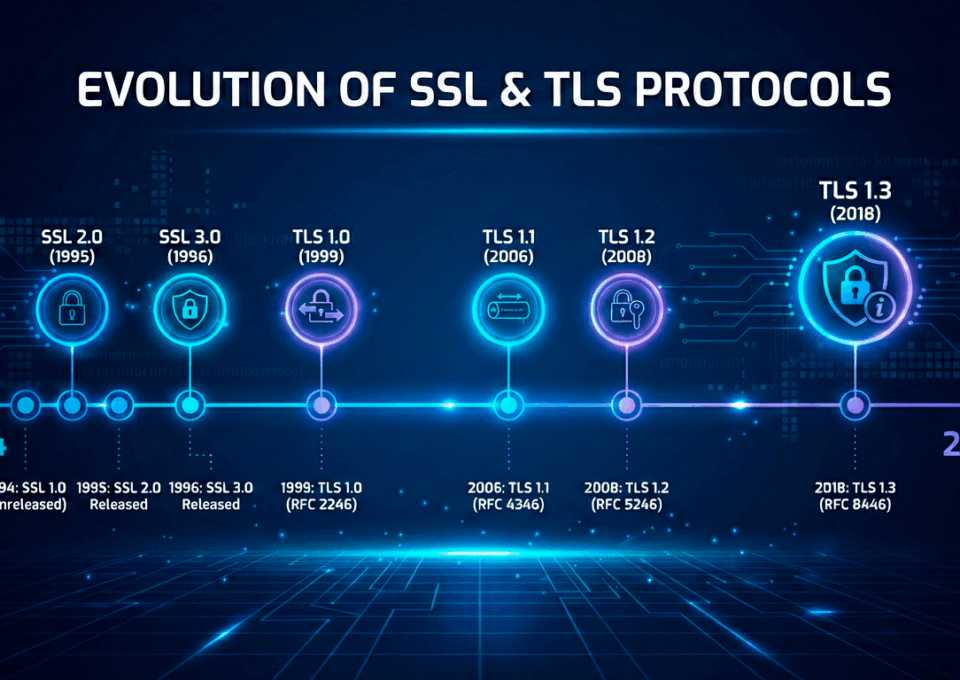
SSL ve TLS Sürümlerinin Tam Tarihçesi: 1994’ten Bugüne

Otuz yılı aşkın bir süredir SSL ve TLS protokolleri milyarlarca çevrimiçi işlemi korumuştur. Netscape’in 1994’teki iddialı güvenlik projesi olarak başlayan süreç, günümüzün sofistike şifreleme standartlarına dönüştü. Bu SSL geçmişi, altı ana protokol sürümünü, sayısız güvenlik iyileştirmesini ve web güvenliği hakkındaki düşüncelerimizde temel bir değişimi kapsamaktadır. SSL/TLS sürümlerini anlamak sadece hangi protokollerin kullanımdan kaldırıldığını bilmekle ilgili […]

SSL Sertifikalarının Gerçekten Satın Alındığı Yerler: Verilerimiz Küresel Güven Hakkında Neler Söylüyor?

HTTPS artık web üzerinde varsayılan bir beklenti. Ancak şifreleme çevrimiçi güvenliğin temelini oluştururken, SSL sertifikaları için ödeme yapmak bunu değiştirmedi. SSL Dragon‘da, SSL sertifikalarının gerçekte nereden satın alındığını tam olarak biliyoruz ve size ücretli şifrelemenin coğrafi dağılımına benzersiz bir bakış sunmak istiyoruz. Verilerimize göre, bir ülke tek başına tüm ücretli SSL satın alımlarının yaklaşık %38 […]

Daha Kısa SSL Ömürleri Neden Göründükleri Kadar Güvenli Değil?

İnternetin güven katmanı, sertifikaların arka planda sessizce yaşamasından bu yana uzun bir yol kat etti. O zamanlar SSL, ekiplerin sık sık takip ettiği bir şey değildi. Bir sertifika satın alır, bir sunucuya yükler ve yolunuza devam ederdiniz. Eğer site açık kalırsa, güven varsayılırdı. Tarayıcılar affediciydi, altyapı yavaş değişiyordu ve sertifika yönetimi temel bir operasyonel kaygıdan […]

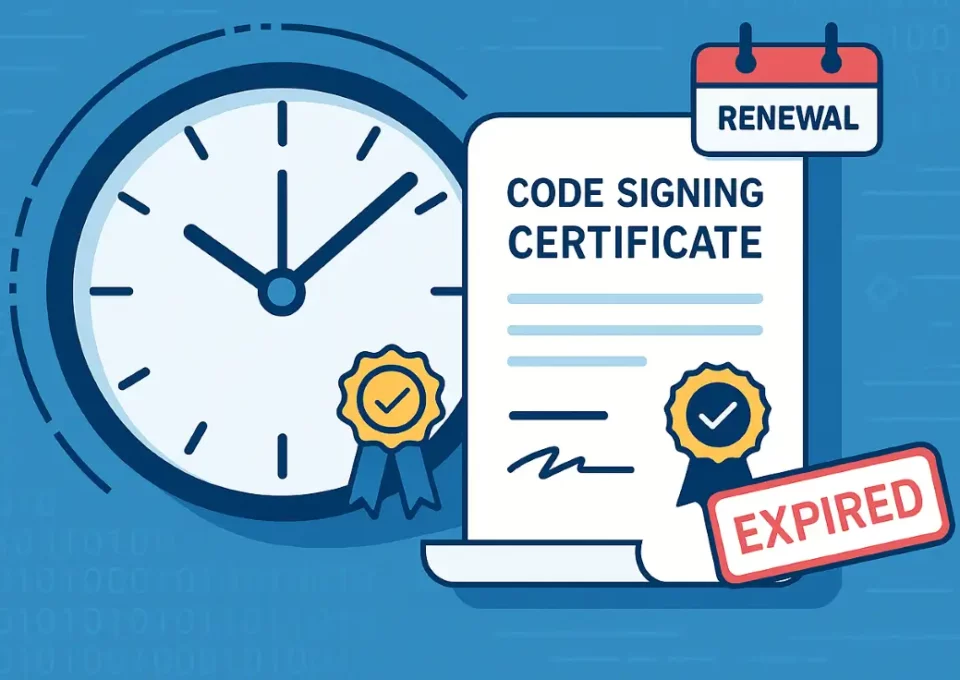
Kod İmzalama Güven Penceresi 460 Güne Küçüldü

Kod imzalama sertifikalarının ömrü yakında çok daha kısa olacak. Sektörde 17 Kasım 2025 tarihinde onaylanan yeni bir kural, 1 Mart 2026 tarihinden itibaren geçerli olmak üzere maksimum geçerlilik süresini 39 aydan 460 güne indiriyor. Değişiklik , güncellenen Kod İmzalama Temel Gereksinimleri v3.10.0′da yer almaktadır.

# Domain Control Validation (DCV)? Complete Guide to SSL Certificate Validation Methods Domain Control Validation (DCV) is a critical security process that certificate authorities (CAs) use to verify that you have control over the domain for which you’re requesting an SSL certificate. Before issuing any SSL certificate, CAs must confirm that the applicant actually owns or manages the domain listed in the certificate. This validation step protects against fraudulent certificate issuance and ensures that only legitimate domain owners can obtain certificates for their websites. In this guide, we’ll explore DCV in detail, covering the different validation methods, best practices, and how to troubleshoot common issues. ## Why Domain Control Validation Matters The primary purpose of DCV is to prevent cybercriminals from obtaining SSL certificates for domains they don’t own. Without this validation requirement, an attacker could theoretically request a certificate for your domain and use it to conduct phishing attacks, man-in-the-middle (MITM) attacks, or other malicious activities. Here’s why DCV is essential: – **Prevents certificate fraud**: Ensures only authorized individuals can obtain certificates for a domain – **Protects user trust**: Visitors can be confident they’re communicating with legitimate websites – **Meets industry standards**: DCV is required by the CA/Browser Forum Baseline Requirements, which all legitimate CAs must follow – **Supports compliance**: Many regulatory frameworks require proper validation before issuing security credentials ## Common Domain Control Validation Methods CAs typically offer multiple DCV methods to accommodate different server configurations and user preferences. Here are the most widely used approaches: ### 1. DNS CNAME Validation DNS CNAME validation is one of the most popular and reliable DCV methods. The CA provides you with a unique CNAME record that you add to your domain’s DNS zone file. **How it works:** 1. Request an SSL certificate 2. CA provides a CNAME record (e.g., `_acme-challenge.yourdomain.com CNAME validation.acme-dns.com`) 3. Add this record to your DNS provider’s control panel 4. CA queries DNS to verify the record exists 5. Certificate is issued once validation is confirmed **Advantages:** – Works across all hosting environments – No downtime required – Can be automated with DNS API integrations – Ideal for load-balanced or multi-server setups – Works even if your website is offline **Disadvantages:** – Requires DNS access – May take a few minutes for DNS propagation – Not ideal if you frequently change DNS records ### 2. DNS TXT Record Validation Similar to CNAME validation, DNS TXT record validation requires you to add a specific TXT record to your DNS zone. **How it works:** 1. CA generates a unique TXT record value 2. You add the TXT record to your DNS settings 3. CA verifies the TXT record exists via DNS query 4. Certificate is issued upon successful verification **Example TXT record:** “` _acme-challenge.yourdomain.com TXT “validation-string-here” “` **Advantages:** – Simple to implement – Works with all domain registrars – Can be automated – Universal compatibility **Disadvantages:** – DNS propagation delays – Requires DNS access – Manual entry can be error-prone if not careful ### 3. HTTP File Upload Validation HTTP file upload (also called HTTP-01 challenge) requires you to upload a specific validation file to your web server’s root directory. **How it works:** 1. CA provides a unique validation file and its contents 2. Upload the file to `/.well-known/acme-challenge/` on your server 3. CA attempts to access the file via HTTP 4. Certificate is issued if the file is found with correct content **Example file path:** “` http://yourdomain.com/.well-known/acme-challenge/validation-token “` **Advantages:** – Doesn’t require DNS access – Quick validation (no DNS propagation needed) – Works well for simple setups **Disadvantages:** – Requires web server access – Must be on accessible server on port 80 – Doesn’t work if your website is offline – Can fail with certain web hosting configurations – Load balancers and multi-server setups complicate implementation – WAF or firewall may block the validation request ### 4. HTTPS File Upload Validation This method is similar to HTTP validation but uses HTTPS instead. **How it works:** 1. CA provides validation file details 2. Upload file to `/.well-known/acme-challenge/` on your HTTPS server 3. CA retrieves the file via HTTPS 4. Certificate is issued upon verification **Advantages:** – More secure than HTTP validation – Works on HTTPS-enabled servers – No DNS changes needed **Disadvantages:** – Requires existing HTTPS access (chicken-and-egg problem for initial certificates) – More complex to implement – Still requires direct web server access ### 5. Email Validation Email validation is a traditional method where the CA sends a verification email to domain-associated email addresses. **How it works:** 1. CA sends verification email to common domain addresses ([email protected], [email protected], etc.) 2. You click the verification link in the email 3. Certificate is issued after you confirm via email **Advantages:** – Simple and straightforward – No server configuration needed – Works with all domain types **Disadvantages:** – Time-sensitive (links expire) – Requires email access – Slower validation process – Relies on email deliverability – Less suitable for automation – Not recommended for production environments ### 6. Phone Validation For higher-assurance certificates (OV and EV certificates), CAs may conduct phone verification. **How it works:** 1. CA calls the phone number on file for the domain registrant or organization 2. You verify your organization’s details during the call 3. Certificate is issued after successful verification **Advantages:** – Higher assurance validation – Detects fraudulent applications more effectively – Required for EV certificates **Disadvantages:** – Time-consuming – Requires availability during business hours – Can be inconvenient – Slower issuance process ## DCV Timeline and Re-validation Requirements Understanding validation timelines is crucial for certificate management: – **Initial Validation**: Usually completes within minutes to hours, depending on the method chosen – **Re-validation**: Most CAs require DCV every 13 months, coinciding with certificate renewal – **DNS Propagation**: May take 5-15 minutes; longer in some cases – **Email Validation**: Can take 24-48 hours in worst-case scenarios Pro tip: Start your renewal process early (30-45 days before expiration) to ensure sufficient time for validation without rushing. ## Best Practices for Domain Control Validation ### 1. Choose the Right DCV Method for Your Setup – **Multi-server/load-balanced environments**: Use DNS validation – **Simple single-server setups**: HTTP or email validation works fine – **Need automation**: Use DNS or HTTP validation with API support – **Limited technical access**: Email validation may be your best option ### 2. Maintain Accurate Domain Records – Keep your domain registrar contact information current – Ensure domain admin email is monitored and accessible – Document your DNS provider’s access credentials – Maintain updated WHOIS information ### 3. Plan for DNS Propagation – Don’t assume immediate DNS record visibility – Allow extra time for global DNS propagation – Consider using DNS propagation checkers – Validate DNS changes before requesting certificate validation ### 4. Automate Where Possible – Use CA APIs with DNS providers (Cloudflare, Route53, etc.) – Implement automation tools like Certbot for Let’s Encrypt – Set up automatic certificate renewal processes – Monitor certificate expiration dates ### 5. Document Your Validation Process – Keep records of which DCV method you use – Document DNS records and validation file locations – Maintain email address lists for validation notifications – Track certificate renewal timelines ### 6. Security Considerations – **Limit DNS access**: Only give necessary DNS credentials to trusted personnel – **Secure validation files**: Use restrictive file permissions on `.well-known` directories – **Monitor validation emails**: Watch for unexpected certificate requests – **Protect domain accounts**: Use strong passwords and multi-factor authentication on domain registrar accounts ## Troubleshooting Common DCV Issues ### DNS Validation Not Working **Problem**: CA can’t find your DNS record **Solutions:** – Verify DNS record is correctly spelled and formatted – Check DNS propagation with online tools – Confirm you’re editing the correct DNS zone – Wait longer for propagation (can take 15+ minutes) – Check for typos in CNAME or TXT values ### HTTP File Validation Fails **Problem**: CA can’t access the validation file **Solutions:** – Verify file is in correct directory: `/.well-known/acme-challenge/` – Check file permissions (should be world-readable) – Ensure port 80 (HTTP) is open and accessible – Verify no firewall or WAF is blocking the request – Check web server access logs for the validation request – Confirm file contains exact content provided by CA – Ensure website responds to HTTP on port 80 ### Email Validation Not Arriving **Problem**: Verification email not received **Solutions:** – Check spam/junk folders – Verify correct email address is on file – Confirm domain email addresses exist and are monitored – Request CA resend the validation email – Check email server logs for delivery issues – Ensure domain DNS MX records are configured correctly ### Certificate Still Not Issued **Problem**: Validation passed but certificate not issued **Solutions:** – Verify you completed all required validation steps – Check domain doesn’t have security issues flagged by CA – Ensure no pending fraud checks – Review CA communication for additional requirements – Contact CA support with your certificate order number ## DCV for Different Certificate Types ### Domain Validation (DV) Certificates DV certificates use only domain control validation. No organization details are verified. Perfect for: – Personal websites – Blogs – Testing environments – Quick SSL implementation ### Organization Validation (OV) Certificates OV certificates require DCV plus organization verification through: – Business registration verification – Phone validation – Additional documentation Better for: – Business websites – E-commerce sites – Sites handling customer data – Professional services ### Extended Validation (EV) Certificates EV certificates demand the most thorough validation: – DCV verification – Extensive organization checks – Legal documentation review – Phone verification with authorized representatives – Background checks Ideal for: – Financial institutions – E-commerce platforms – High-trust websites – Sites handling sensitive transactions ## DCV and Wildcard Certificates Wildcard certificates (*.yourdomain.com) require DCV just like standard certificates, but with important notes: – **DNS validation**: The only method that works for wildcard issuance – **Email validation**: Also supported for wildcards – **File upload**: Cannot validate wildcards (no HTTP access to `*.yourdomain.com`) – **Coverage**: Once validated, the wildcard protects all subdomains ## Automating DCV with APIs Many modern CAs and DNS providers offer APIs to automate DCV: **Popular integrations:** – **Let’s Encrypt + Certbot**: Automated renewal with DNS or HTTP validation – **Cloudflare API**: Automatic DNS record management – **AWS Route53**: Programmatic DNS updates – **DigitalOcean API**: Automated DNS validation – **Azure DNS**: Integration with certificate management These automations significantly reduce manual validation steps and certificate renewal headaches. ## Final Thoughts Domain Control Validation is a crucial security mechanism that protects the integrity of the SSL certificate ecosystem. By understanding the various DCV methods, choosing the right approach for your infrastructure, and following best practices, you can ensure smooth certificate issuance and renewal processes. Whether you’re managing a single website or a complex multi-domain environment, selecting the appropriate DCV method and maintaining proper domain records will save you time and prevent certificate-related downtime. Need help choosing the right SSL certificate with your preferred DCV method? SSL Dragon offers a wide range of SSL certificates from trusted CAs, with flexible validation options to suit your specific needs.

Bir SSL/TLS sertifikası sipariş ettiğinizde, Sertifika Otoritesi (CA) bunu sadece teslim etmez. Sizdeki alanı gerçekten kontrol ettiğinizin kanıtını gerektirir. İşte bu noktada Alan Kontrolü Doğrulaması (DCV) devreye giriyor. Bu, herhangi bir sertifika verilmeden önce alan sahipliğini onaylayan doğrulama işlemidir. Bu sadece bürokratik kırmızı bant değildir. DCV, saldırganların sahip olmadıkları alanlar için geçerli sertifikalar almasını engeller; […]