

bg-blog-articles

Author: Dionisie Gitlan

I've been writing for SSL Dragon for over 10 years, focusing entirely on SSL certificates and digital security. My job is to take complex cybersecurity topics and strip away the jargon, making sure you get the clear, practical information you need to keep your website safe.

Sectigo Acquires Icon Labs and Launches IoT security Platform

Sectigo (formerly Comodo CA) has acquired Icon Labs, a security company providing cross-platform solutions for embedded OEMs (Original Equipment Manufacturers) and IoT (Internet of Things) device manufacturers.  With the IoT market expected to reach more than 75 million devices by 2025, securing connected devices across an ecosystem has become a top priority for the leading […]
Firefox 66 update redesigns SSL error messages

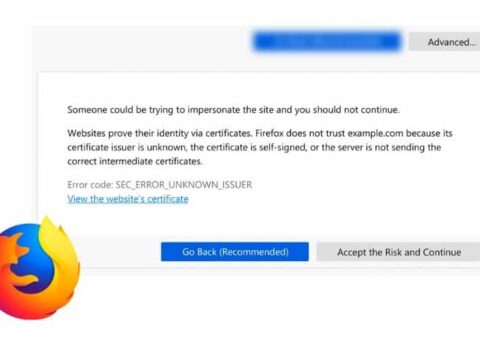
Firefox 66, the latest version of the popular browser introduced several new features including block autoplay (prevents a website from automatically playing sound), improved search experience, smoother scrolling, and many more. The new release also came with redesigned SSL error messages to help users better understand the risks of an unsecure connection. If the Firefox […]

Comodo CA rebrands as Sectigo

Comodo CA, one of the world’s largest Certificate Authorities with more than 3 million customers in 150 countries, has rebranded as Sectigo.  Since its inception in 1998, Comodo has issued over 100 million certificates and has served over 700,000 businesses worldwide. The rebranding marks the dawn of a new era, as the company broadens its […]

SSL Validity to be Restricted to 2 Years from March 2018

The Certificate Authority Browser Forum, also known as CAB Forum passed ballot 193 which reduces SSL Certificates validity (Domain Validation and Business Validation) to 825-days (roughly 27 months). The ballot didn’t affect the Extended Validation Certificates, due to their already existing 2-year lifetime. The new regulations will come into effect on March 1, 2018. Chris Baily […]

Google Introduces Security Panel in DevTools

In 2014, Google Chrome Security Team expressed their intention to mark both, broken HTTPS URLs and HTTP websites as being non-secure online resources. Since HTTP is the only non-secure online resource that remained unmarked, the purpose of this marking is to clearly inform users that HTTP websites don’t provide any security for their data. This […]

Cracking SSL Encryption is Out of Human Reach

SSL/TLS encryption plays a vital role in ensuring the privacy and integrity of online communications, allowing us to share personal and financial information securely. However, as technology advances and computing power surges forward, concerns about the vulnerability of SSL encryption have emerged. In recent years, the idea of cryptographic backdoors, quantum computing advancements, and brute-force […]

What are the most recent news in the SSL Certificates industry?

Maintaining the security of your website is a very thoughtful process. Check out the most recent news in the SSL Certificates industry in order to ensure secure browsing for your clients: Summing all up SSL Certificates industry remains a dynamic and flexible field where constant security updates systematically eliminate security flaws in data encryption.

SSL Validity Limited to 39 Months Starting with April 2015

In order to increase the SSL Certificates’ Security, the ones who regulate the SSL industry often reevaluate and update the rules for applying and owning an SSL Certificate. According to the Certificate Authorities (CA) and Browser Forum’s Requirements, SSL Certificates validity will no longer surpass 39 months period starting with April 1st, 2015. The Certificate Authorities […]

PCI DSS 3.2: You should quit using SSL 3.0 and TLS 1.0

According to the latest news in the SSL industry, the new PCI DSS 3.2 version will be released this Spring. Initially, its scheduled release date was in Fall. The PCI Security Standards Council revised the release date to include the extended period of the SSL 3.0/TLS 1.0 migration due to the existing expanding threat landscape. PCI DSS 3.2 The […]