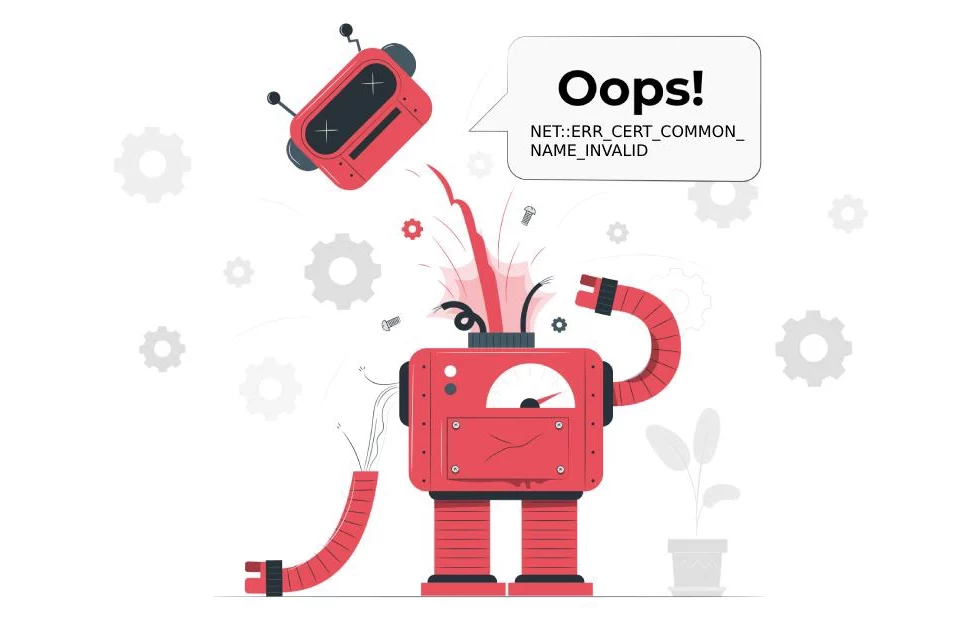
NET::ERR_CERT_COMMON_NAME_INVALID is named after a certificate field that Chrome stopped reading in 2017. The error still means what its name suggests, that the certificate a server presented was issued for a different hostname than the one in the address bar, but the field Chrome compares is no longer the Common Name. It is the subjectAltName […]

Cloudflare’s error 525, “SSL Handshake Failed,” is one of the more confusing SSL errors to land on. The page your visitors get looks broken, yet your own server can appear perfectly healthy when you check it. The error is more specific than it first seems: it means Cloudflare reached your site’s network but could not […]

Mixed content is the odd one out among SSL problems. There is no warning page to click through, no error code to search for, and nothing wrong with your certificate. The page loads, the address bar looks normal, and yet something on it is missing: a logo that will not appear, a slider that never […]
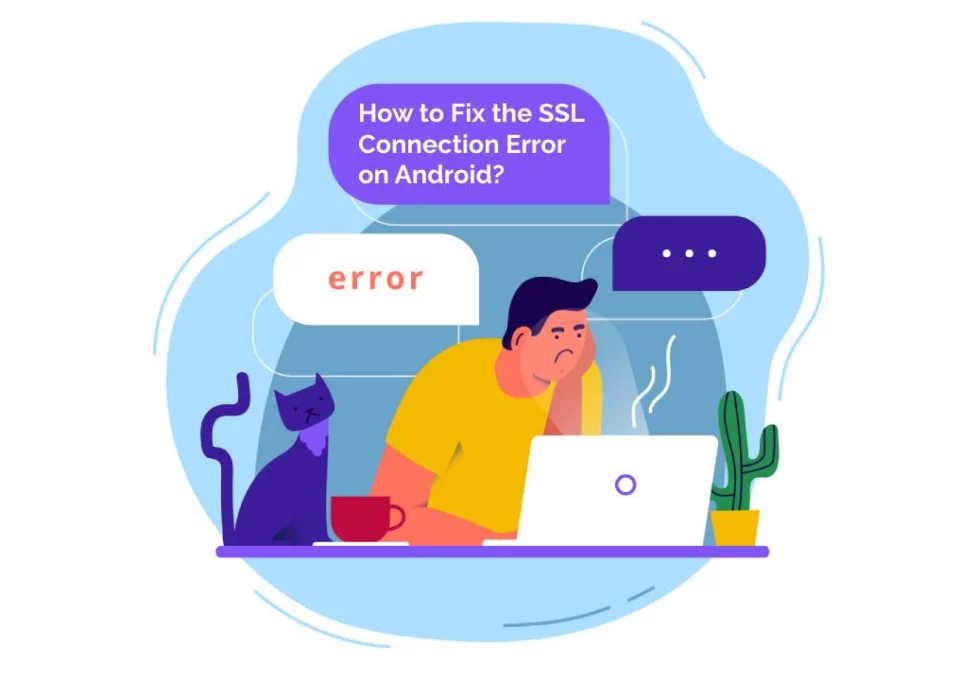
An SSL connection error on Android usually looks like a full-page warning that says “Your connection is not private,” and it can appear in Chrome, inside an app’s built-in browser, or as a silent failure in a native app that simply refuses to load anything. The message is generic on purpose, so it tells you […]
You open a site in Google Chrome and get a blank error page instead: “This site can’t provide a secure connection”, followed by the code ERR_SSL_PROTOCOL_ERROR. Microsoft Edge and the other Chromium browsers show the same message, because they share the same networking code. Most of the advice written about this code points in the […]
This guide shows you how to generate a CSR (Certificate Signing Request) for VMware Horizon, the platform now published as Omnissa Horizon. You create the request directly on the Windows Connection Server with tools already installed there: the Microsoft Management Console (MMC) Certificates snap-in. The private key stays on the server, and you send only […]
This tutorial explains how to generate a CSR (Certificate Signing Request) on a Ubiquiti UniFi Cloud Key. The Cloud Key does not have a built-in CSR generator in its web interface, so you will create the CSR over SSH using OpenSSL. These steps apply to Cloud Key Gen1 and Gen2/Gen2+, as well as self-hosted UniFi […]
This guide shows you how to generate a CSR (Certificate Signing Request) on Skype for Business Server. You can build the request two ways: with the graphical Certificate Wizard inside the Skype for Business Server Deployment Wizard, or with the Request-CsCertificate cmdlet in the Skype for Business Server Management Shell. Both read the names for […]
This tutorial shows you how to generate a CSR on a MiCollab Server. MiCollab runs on Mitel Standard Linux (MSL), so the request is created in the MSL Server Manager, the same web admin you use for backups and licensing. There is nothing to install and nothing to type at a shell: you fill in […]
This guide shows you how to generate a CSR (Certificate Signing Request) on a Kemp LoadMaster. You create the request in the LoadMaster WUI under Certificates & Security > Generate CSR, name the private key, fill in your organization details, then copy the CSR text and send it to your Certificate Authority. The private key […]