

hero-blog-1

Advanced SSL

Why Certificate Automation Still Has Low Adoption

Certificate automation is a solved problem. The tools exist, the CAs support them, and most IT teams understand the risk of going manual. Yet 38% of organizations still manage certificates with spreadsheets, and 70% admit they don’t have the staff to keep up. The gap between what’s available and what’s adopted isn’t a technical story. […]


Why the Post-Quantum Certificate Challenge Is Bigger Than Shorter Validity

The SSL industry already has one countdown on the wall. By 2029, the old annual renewal rhythm will be gone. Certificates will expire faster, automation will be mandatory, and businesses still running on calendar reminders will fall behind. That challenge, at least, is legible. The harder problem is not about time. It’s about visibility. Post-quantum […]

Why The SSL Market Is No Longer Selling Encryption

If SSL certificates were only about encryption, the paid market should have collapsed by now. Basic HTTPS is everywhere. Free DV certificates protect ordinary websites. Hosting panels turn SSL into a checkbox. Browsers no longer treat encrypted pages as special; they flag unencrypted ones as broken. Yet paid SSL still exists. The market thrives because […]

Behind the Tickets: What Really Makes SSL Errors Difficult to Debug

SSL certificates are often treated as a set-and-forget layer of infrastructure. Once installed, browsers stay quiet, and encryption fades into the background. From a support perspective, reality looks very different. Behind routine installations sits a steady flow of tickets where certificates are technically valid, correctly deployed, and still failing in ways that aren’t immediately visible. […]

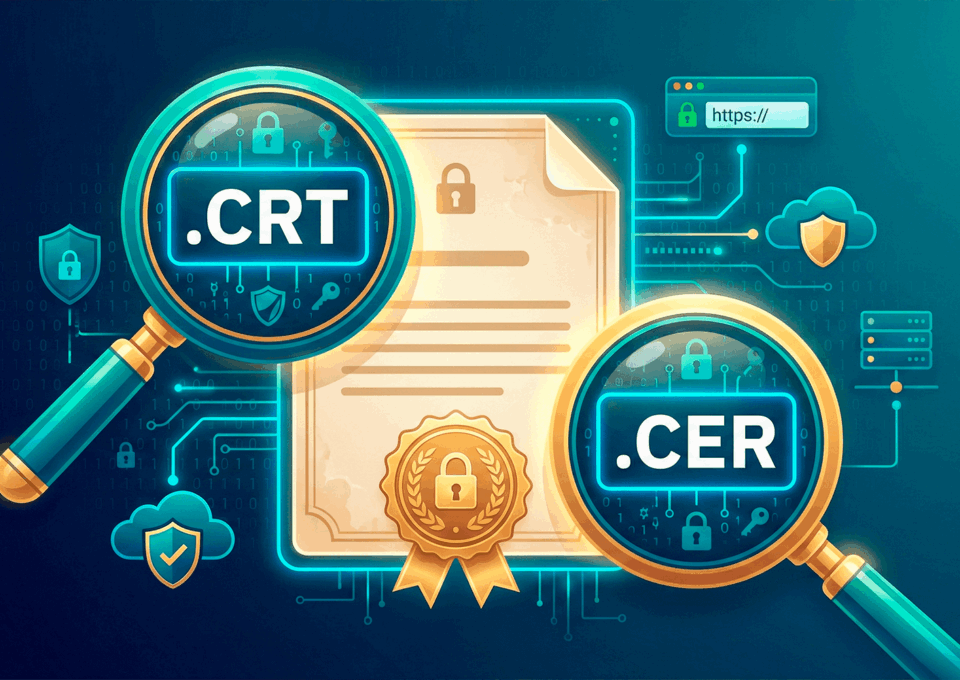
CRT vs CER File Extensions Explained

You’ve just received your SSL certificate files and notice two extensions: .crt and .cer. Your server expects one, your certificate authority (CA) sent the other. Before you start troubleshooting, here’s the short answer: both file extensions hold the same X.509 certificate data, and the difference is mostly a naming convention. But “mostly” is doing some […]

Why Multi-Certificate Environments Break TLS Mental Models

At SSL Dragon, we work with SSL certificates across a wide range of environments, from simple single-domain sites to modern stacks where TLS is deliberately spread across multiple layers. Over time, that range makes one thing clear: TLS itself is stable, but the way it’s understood hasn’t kept pace with its evolution. Today, HTTPS commonly […]

Why Shorter SSL Lifetimes Aren’t the Safety Net They Seem

The Internet’s trust layer has come a long way since certificates lived quietly in the background. Back then, SSL wasn’t something teams tracked often. You bought a certificate, installed it on a server, and moved on. If the site stayed up, trust was assumed. Browsers were forgiving, infrastructure changed slowly, and certificate management felt closer […]

Code Signing Best Practices: Essential Security Guidelines for Software Developers

Code signing leverages public key infrastructure (PKI) to serve as your software’s digital passport. Through digital signatures, it creates cryptographic proof of authenticity and integrity. It authenticates you as the publisher and ensures code integrity by proving your code hasn’t been tampered with since you released it. When users download your software, they’re trusting you […]